Do I Have Your Attention?
Do I Have Your Attention? Understanding Focus in a Distracted World
A presentation on attention, distraction, and how to rebuild focus in a phone-driven world
Some of the most valuable companies in the world make money by capturing our attention. Our phones, apps, games, streaming platforms, and now AI tools are designed to pull focus, and they’re very good at it.
Worry about technology stealing our attention isn’t new. In 1843, Nathaniel Hawthorne lamented that the cast-iron stove was replacing the family hearth and the conversations that gathered around it. Novels, radio, and television all faced similar fears. What’s different now is how much of life, from work and school to friendships and entertainment, runs through a single device in our pocket.
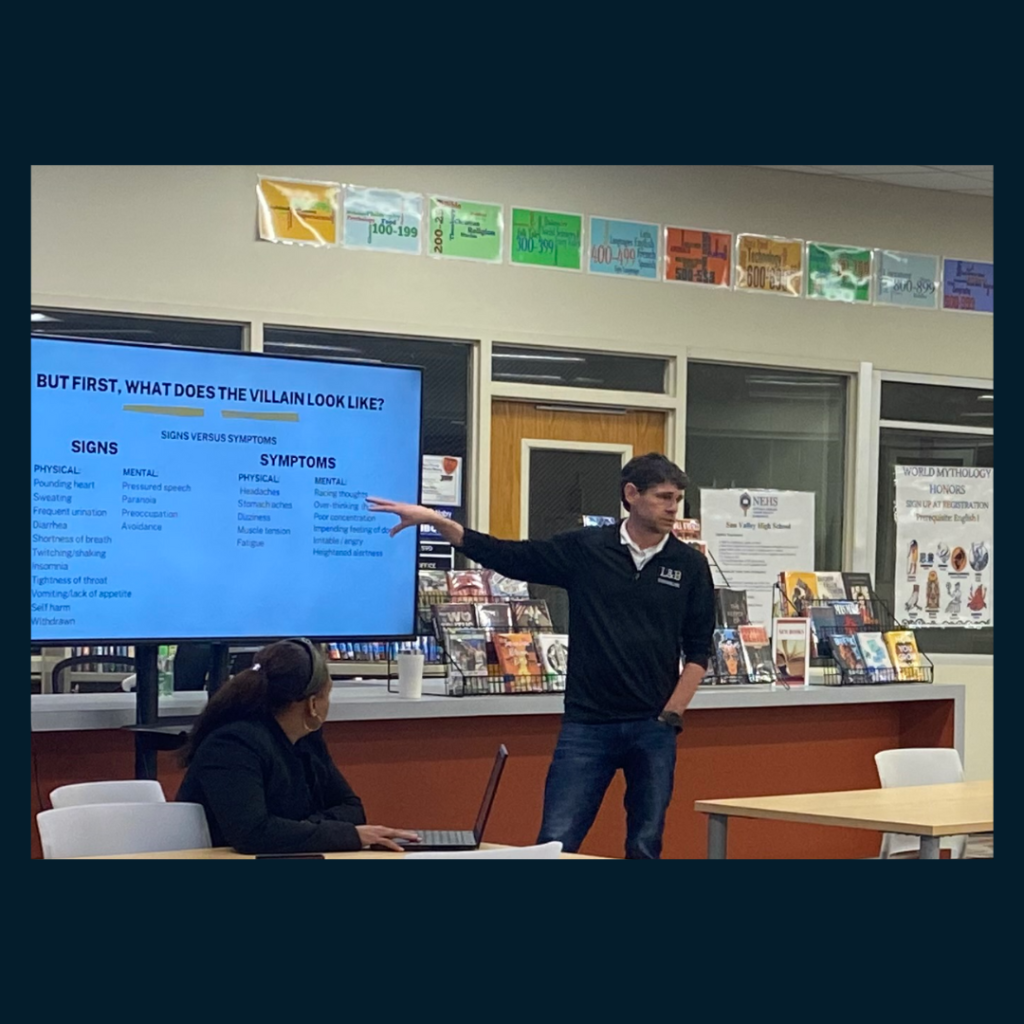
In Do I Have Your Attention?, Trent Morrow, LCSW, owner of L & B Counseling in Charlotte, NC, explains how attention works, what constant distraction is doing to focus, learning, and relationships, and practical tools to take attention back.
Who This Presentation Is For
- Employers, managers, and teams struggling with focus and productivity
- HR and employee wellness programs
- Schools, teachers, and administrators
- Parents and parent groups
- College students and student support services
- Churches and community organizations
What Participants Will Learn
The “Phone-ication” of Everything
Work, school, banking, shopping, socializing, entertainment, and learning have all moved onto the same screen. The presentation looks at what happens when one device becomes the doorway to nearly everything.
The Fundamental Challenge: Human Condition vs. Environment
The human condition. Our brains have biological limits. What looks like multitasking is usually rapid task switching, which costs focus and energy. The talk also raises bigger questions: What does learning look like when tools do the thinking? What’s the difference between knowing how to find an answer and truly understanding something?
The environment. We now live in two worlds at once: the real world of classrooms, offices, kitchens, and dinner tables, and the virtual world of gaming, social media, notifications, and AI. Each constantly competes with the other for our attention.
The Impact on Learning
- Less note-taking and weaker retention
- Reduced reading stamina
- More task switching
- Lower academic performance
- Higher rates of remedial coursework in college
Where We Get Stuck
Using the path from data to information to knowledge to wisdom, and the “ladder of inference” we climb from raw data to assumptions, beliefs, and action, participants learn how constant input can keep us stuck at the level of information without ever reaching understanding or good judgment.
Two Types of Attention
- Directed attention is the effortful focus we use to study, work, drive in the rain, or perform under pressure. It’s limited and gets tired.
- Involuntary attention is automatically captured by things like an accident on the road, a threat, an argument, or a stream of notifications.
Technology is built to hijack involuntary attention, which drains the directed attention we need for the things that matter.
What Constant Distraction Is Costing Us
- Shorter attention spans: directed attention fatigue, less follow-through on tasks, and a lower tolerance for anything that feels boring
- Weaker critical thinking: declines in reading, writing, judgment, and wisdom, while reliance on AI and access to information rise
- A more self-focused culture: the front-facing phone camera, constant reputation management, optimization culture, and fewer in-person friendships
Where Solutions Exist
Policy: federal and state action, guardrails for digital environments, age restrictions, and enforcing the laws already on the books.
Community: businesses, schools, and homes setting shared norms. The talk invites audiences to consider where a policy like the no-phones rule at the Masters golf tournament might work in their own families, schools, and communities.
Individual:
- Keep your phone out of reach while focusing
- Set time limits
- Add friction to your most distracting apps
- Choose active play over passive consumption
- Design environments that make distraction harder
- Build focus stamina gradually, like strength training
The Healthy Human Recipe: sleep, movement, nutrition, relationships, stress management, and mindset as the foundation for attention. [Link to Healthy Human Recipe page]
Focus Tools Participants Can Use Right Away
Behavioral tools:
- Micro-pauses between tasks
- The five-minute commitment to get started
- Changing your environment
- Using an agenda or to-do list to offload mental clutter
- Single-cue triggers that signal “time to focus”
- Reframing distraction
Body-based tools:
- Double breath (physiological sigh) and other breathing techniques
- Spot staring to narrow focus
- Panoramic vision to relax the stress response
- Saccade drills (rapid eye-movement exercises)
- Combining eye tracking with breathwork
The session ends with participants sharing what they plan to apply in their own lives.
Key Takeaways
- Our attention is a limited resource, and much of today’s technology is designed to capture it
- Multitasking is mostly task switching, and it comes at a cost
- Protecting directed attention requires both environmental changes and personal habits
- Focus can be trained and strengthened like a muscle
- Simple tools, from phone placement to breathing and eye exercises, can improve focus quickly
About the Presenter
Trent Morrow, LCSW, is the owner of L & B Counseling PLLC in Ballantyne, Charlotte, NC. He speaks to organizations, schools, and community groups on attention, technology, stress, and youth mental health. His presentations combine clinical insight with practical tools people can use the same day.
Presentation Details
- Length: [60–90 minutes, including interactive exercises]
- Format: In-person in the Charlotte area or virtual
- Interactive: Includes a pop quiz, live focus exercises, and group sharing
- Customizable for workplace, educator, student, or parent audiences