
The New Sport: High Stakes Academics
The New Sport: High Stakes Academics
A presentation on academic pressure, college admissions, and the mental health of high-achieving students
For many students, school has become a competitive sport. Eight to twelve AP classes, a GPA above 4.0, a résumé with national-level achievements, and acceptance rates at top universities in the single digits. The result is a generation of students who look successful on paper but are anxious, exhausted, and afraid that one B could undo everything.
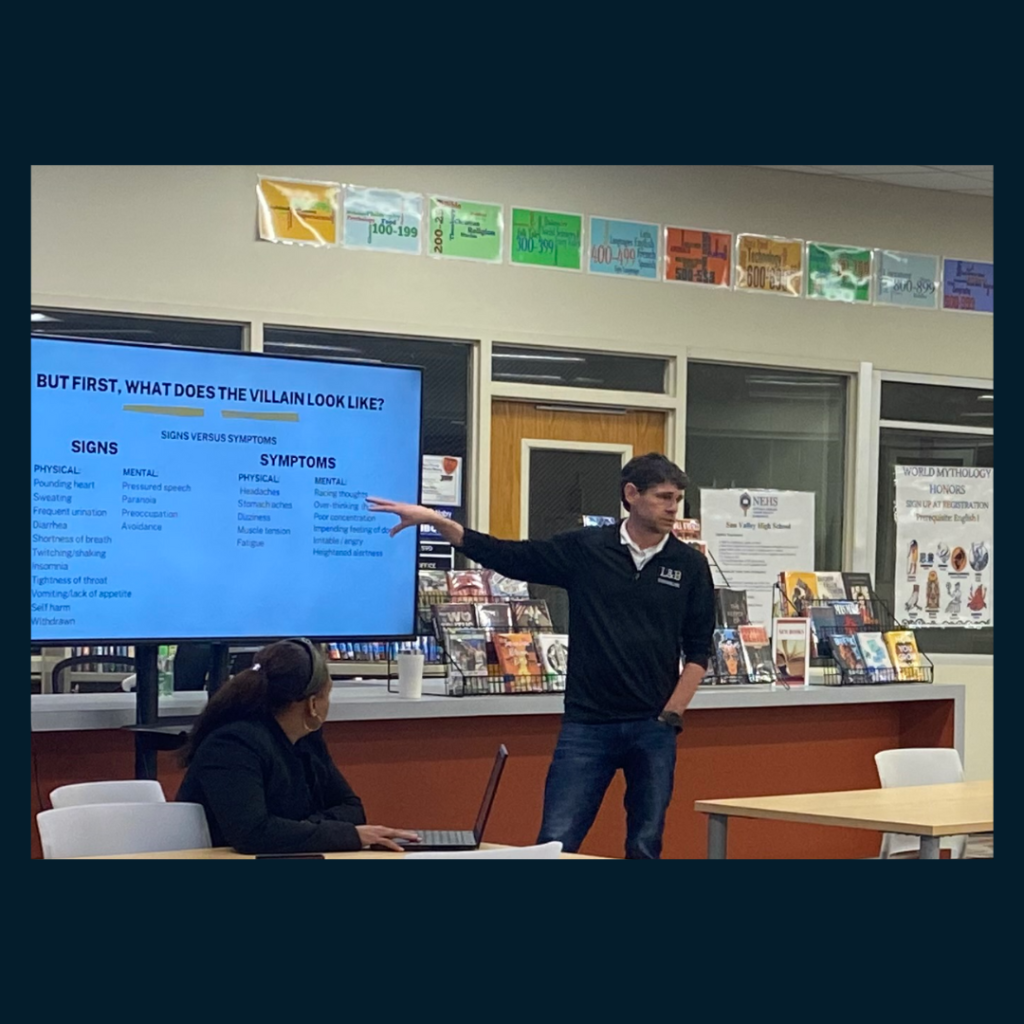
In The New Sport: High Stakes Academics, Trent Morrow, LCSW, owner of L & B Counseling in Charlotte, NC, explains what’s driving academic pressure, what it’s costing students, and what parents, schools, and communities can do about it.
Who This Presentation Is For
- Parents of middle and high school students
- PTAs, PTOs, and booster organizations
- High school counselors, teachers, and administrators
- Independent and public schools in high-achieving communities
- College counseling offices and education nonprofits
What Participants Will Learn
What the Problem Looks Like
High-achieving schools are defined by strong academic output, competitive college placement, and often an affluent community. Research led by Dr. Suniya Luthar and others has identified students at these schools as an at-risk group for mental health concerns. Participants learn how that stress shows up:
- Internalizing: anxiety, depression, perfectionism, and anhedonia (losing enjoyment in things)
- Externalizing: substance use, academic integrity issues, and envy between peers
- Somatic: poor sleep and stress-related physical problems
The Veneer of Success
The traits that make these students successful are often the same ones that hurt them. Participants learn about the internal dialogue many high achievers carry: self-worth that depends on performance, the perceived cost of a B, exhaustion that feels normal, and the fear of being exposed as an impostor.
The Numbers
Students at high-achieving schools report rates of persistent sadness, clinically significant anxiety and depression, and daily extreme stress well above national averages. The presentation walks through the data and what it means.
How the Standards Changed
- College acceptance rates at elite schools have dropped sharply while applications have surged, including at North Carolina schools like UNC-Chapel Hill, NC State, and Duke
- Expectations have shifted from a few AP classes and a well-rounded résumé to a heavy AP load and a “spike” of national-level achievement
- Grade inflation has pushed average GPAs up while test scores have not kept pace
- The cost of college has risen dramatically, adding pressure to “get it right” with no room for exploration
Does It Matter Where You Go to College?
The presentation reviews research, including the Dale-Krueger study, suggesting that for many students, career outcomes depend more on the student and their field of study than on the name of the school, with important exceptions for first-generation and low-income students.
Gender Differences
High-achieving girls are more likely to show anxiety, perfectionism, and self-blame, often trying to be perfect in every area at once. High-achieving boys are more likely to hide stress behind a stoic mask and cope through risk-taking or substance use. Participants learn to recognize both patterns.
Who’s Responsible?
- External pressures: the admissions arms race, parental advocacy, and community rankings and property values
- Parenting styles: helicopter, snowplow, and concerted cultivation
- Internal pressures: grading and evaluation systems within schools, and the push for academic “performance enhancers”
The Trade-Offs
- Leisure: hobbies replaced by résumé-building extracurriculars
- Social development: peer rivalry instead of friendship, identity locked in too early, and loss of a student’s own voice
- Biology: students averaging 6 to 6.5 hours of sleep against a recommended 8 to 10, rising stimulant use, and more requests for college accommodations
- The loss of “safe failures”: zero margin for error means students never learn to recover from setbacks
Solutions
For students:
- Recognizing and managing emotional temperature
- The Healthy Human Recipe: sleep, movement, nutrition, relationships, stress management, and mindset
- Practical stress tools
- A “mattering audit” to separate self-worth from achievement
- Building in safe failures
- Running on “clean fuel” (purpose and curiosity) instead of “dirty fuel” (fear and comparison)
For families:
- The Swiss Army Knife of Parenting: knowing when to use each parenting style
- Calibrating expectations and avoiding comparison
- Praising process over outcome and character over achievement
- Parents modeling vulnerability
For communities and schools:
- Sharing success stories of graduates from non-elite schools
- Protecting leisure time and limiting homework
- Supporting healthy sleep and exercise
- Reconsidering AP limits, grading policies, and how admissions standards are communicated
Rethinking the Goal
Shift from “gold star” performance to character: conscientiousness, open-mindedness, prosociality, prudence, zest, and humility. Parents learn simple language changes, such as replacing “You’re so smart” with “I noticed how you didn’t give up when that problem got hard.”
Key Takeaways
- Students at high-achieving schools face significantly higher rates of anxiety, depression, and stress
- Academic success can hide real struggle
- The college admissions landscape has changed dramatically, and fear of falling behind drives much of the pressure
- Where a student goes to college often matters less than families think
- Parents and schools can reduce pressure by valuing character, process, rest, and safe failure
About the Presenter
Trent Morrow, LCSW, is the owner of L & B Counseling PLLC in Ballantyne, Charlotte, NC. He speaks to schools, parent groups, and organizations on academic pressure, youth mental health, parenting, and the impact of technology on kids. His practice works with anxious, high-achieving students and their families every day.
Presentation Details
- Length: 60–90 minutes, including discussion
- Format: In-person in the Charlotte area or virtual
- Interactive: Opens with discussion on how school has changed since parents were students
- Customizable for parent, educator, or student audiences