
Understanding Childhood Anxiety: The Haunted House Syndrome
Understanding Childhood Anxiety: The Haunted House Syndrome
A presentation on why so many kids feel anxious and how to help them find their way out
Picture walking through a haunted house. Your heart races, your body braces, and you’re sure something is about to jump out at you. Now imagine feeling that way most of the time, even at school, at home, or lying in bed at night.
That’s what life feels like for many children and teens today. Their brains are reacting to a world that feels uncertain and overwhelming, even when they’re physically safe.
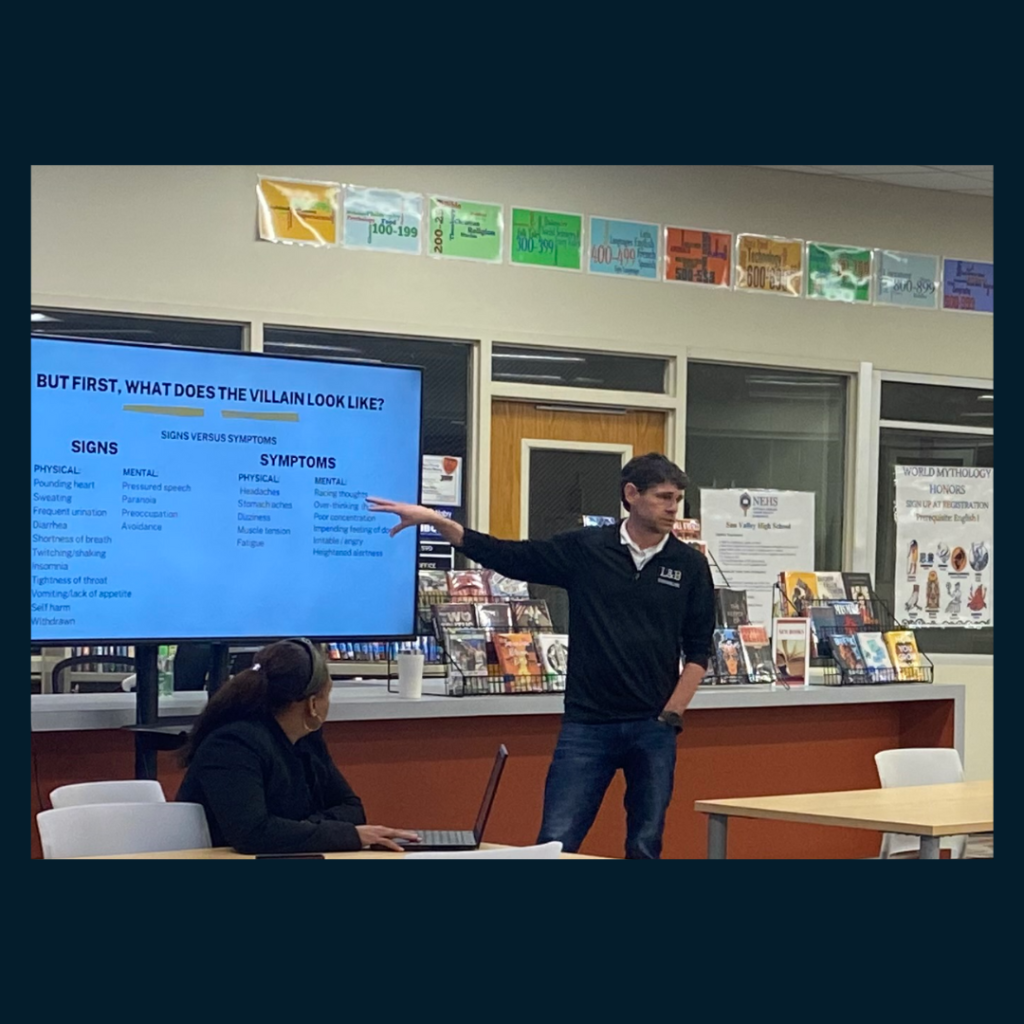
In Understanding Childhood Anxiety: The Haunted House Syndrome, Trent Morrow, LCSW, owner of L & B Counseling in Charlotte, NC, explains what’s driving anxiety in kids, what’s happening in their brains and bodies, and practical tools to help them get out of the haunted house.
Who This Presentation Is For
- Parents and caregivers of children and teens
- PTAs, PTOs, and parent groups
- Schools, teachers, counselors, and administrators
- Middle and high school students [confirm if you present to students]
- Youth organizations, churches, and community groups
What Participants Will Learn
What’s Making Anxiety Worse?
Existential worries. Today’s kids have grown up with climate change, wars, mass shootings, and a global pandemic in the news and on their screens.
Economic uncertainty. Kids hear the questions adults are asking: How will AI change jobs? Is college still worth the cost? Will I ever be able to afford a home? Debt and rising costs weigh on families, and kids feel it.
Technology.
- Social media widens the circle of comparison far beyond the handful of close relationships humans are built for. Passive scrolling can leave kids feeling empty, and it’s hard to tell what’s real and what’s filtered.
- Reward vs. effort. Quick, easy rewards are available everywhere, which makes real-life effort feel harder by comparison.
- The attention economy. Apps are designed to capture involuntary attention, draining the directed attention kids need for school, relationships, and rest.
What’s Happening in the Brain?
The brain is old. It was built to respond to danger with fight, flight, or freeze. Today’s constant stream of worries, notifications, and uncertainty can keep that alarm system switched on, even when nothing dangerous is happening.
Why It Matters
Ongoing anxiety affects the whole child:
- Physical health: stress affects nearly every system in the body, including sleep, digestion, immune function, and heart health
- Mental health: anxiety can fuel mood problems and inattention, and it amplifies nearly every other struggle
- Daily habits: poor sleep, less exercise, weaker nutrition, loss of interest, more time alone, and slipping school performance
How to Get Out of the Haunted House
Know Your Emotional Temperature
Kids and adults learn to notice when their emotional temperature is rising and why it’s harder to think clearly when it’s high.
The Worry vs. Anxiety Decision Tree
- Worry is based on facts. Something real is happening, and it can be solved or planned for.
- Anxiety is fear without facts. It feels real, but the threat isn’t actually there.
Learning to tell the difference helps kids decide how to respond.
Choosing the Right Response
- Fight: choose long-term gain over short-term relief, and practice recovering within a minute or two
- Freeze: learn when it’s okay to pause or stop
- Flee: sometimes walking away is the healthiest choice
Quick Tools for Coping With Anxiety
Self-help strategies:
- Gratitude: doing something kind for someone else has a big emotional payoff
- Practicing failure: lower the bar and raise the floor so mistakes become part of learning
- Taking healthy risks: play more, focus on hope, and build tolerance for discomfort
Calming tools:
- The double breath (physiological sigh) and other breathing techniques
- Grounding exercises
- Humor
- Spirituality
- Saying worries out loud
- Asking for help
The Healthy Human Recipe: sleep, movement, socialization, effort, passions, and nutrition. The core message for kids: you can take steps to feel better, and you’re not alone.
Key Takeaways
- Many kids live with a constant sense of threat, even when they’re safe
- World events, economic uncertainty, and technology all contribute to childhood anxiety
- Anxiety affects physical health, mental health, sleep, and school performance
- Teaching kids to separate worry from anxiety helps them respond instead of react
- Simple daily tools and healthy routines can help kids feel calmer and more in control
About the Presenter
Trent Morrow, LCSW, is the owner of L & B Counseling PLLC in Ballantyne, Charlotte, NC. He speaks to schools, parent groups, and organizations on childhood and teen anxiety, academic pressure, technology, and youth mental health. His practice works with anxious children, teens, and their families every day.
Presentation Details
- Length: [45–60 minutes, including Q&A]
- Format: In-person in the Charlotte area or virtual
- Customizable for parent, educator, or student audiences